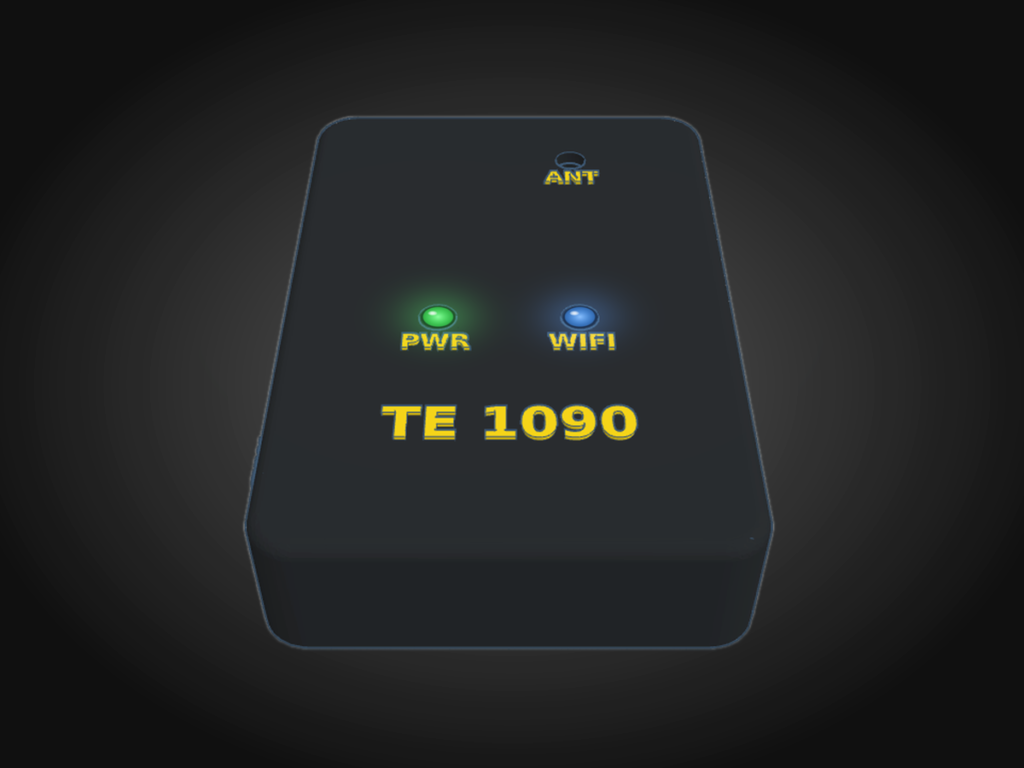
From a pilot perspective; A tablet in the cockpit already has a map, a GPS receiver, and a flying app. It cannot hear aircraft. The receiver I am building has that one job: listen on 1090 MHz, and hand the reports to the app the pilot already uses.
That rule removed most of the parts people expect in a portable ADS-B box.
What it has to do
Three things, and no more.
- Receive 1090 MHz ADS-B. In Europe that is the broadcast airliners and many smaller aircraft already transmit.
- Convert each report to GDL 90, the format those flying apps already understand.
- Send it over Wi-Fi. The box creates the network. The tablet joins it. The app listens on UDP port 4000.
If a part does not serve one of those three, it does not go in the first unit.
No second GPS
The iPad already knows where it is. FltPlan Go can take its position from the tablet, or from the ADS-B receiver. I tried both. Sending a made-up position from the box would put the user in the wrong place, so the box does not do it. The heartbeat tells the app that traffic is available and that this box is not a GPS.
A GPS inside the receiver would also mean another antenna, another serial port, and two positions that can disagree. The tablet already settled that question.
No battery
Power is USB-C, at 5 V. In the aircraft that can be the panel USB socket. At home it can be a power bank. The cell, the charger, and the battery-shipping rules stay outside the box.
The cost of that choice is that the unit does not run by itself. It runs when something else powers it. For a first unit, that is the right trade and may not change this for future changes (Comments welcome).
No new map, and no extra screen
The pilot his/her own flying app drawing the aircraft. Building another map would mean building another app, and then asking the pilot to look at it instead of the chart they already know/use.
The box has no display. A status page on the Wi-Fi network is enough at a desk. In use, the screen is the tablet.
ADS-L, for the rest of European traffic
In Europe, many gliders, microlights and light aircraft do not broadcast ADS-B on 1090 MHz. They use ADS-L, Europe’s open standard on 868 MHz, which you’ll find with SafeSky, PilotAware and OGN trackers. ADS-L reception is under development on the TE 1090, so those aircraft can show up alongside the 1090 MHz traffic. The latest on that is always on the TE 1090 page.
What this gives up
A Raspberry Pi receiver is often described as able to carry a GPS, serve more pages, and grow extra radios. The TE 1090 can take on that same kind of work, and on far less power. A Pi asked to do all of that at once is unlikely to keep up.
The first unit receives 1090 MHz, speaks GDL 90, and takes power from a USB-C cable. Position, charts, and the battery stay with the pilot.